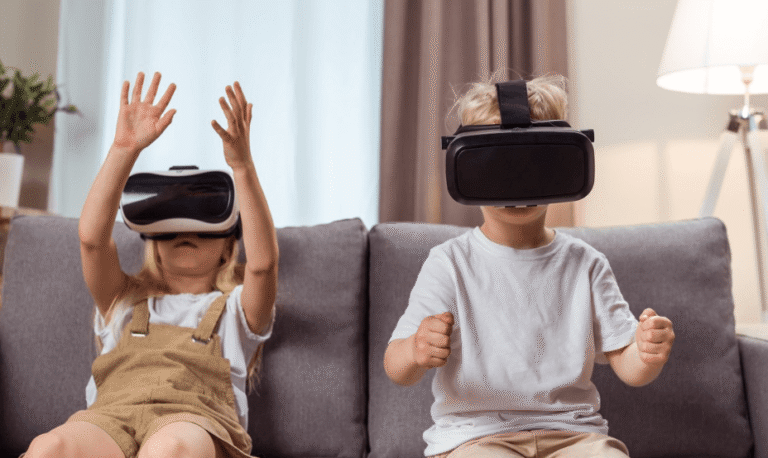
How Virtual Reality Is Changing the Way We Learn

Virtual reality is reshaping educational landscapes by offering immersive experiences that engage learners like never before. This innovative approach enables students to interact with complex concepts through realistic simulations. As educators explore these advancements, questions arise about their effectiveness in addressing various learning styles. The implications for traditional teaching methods are profound, suggesting a shift towards dynamic, student-centered environments. What possibilities lie ahead as technology continues to evolve and integrate into our classrooms?
Enhancing Engagement Through Immersive Learning Experiences
As educators increasingly seek innovative methods to captivate students, virtual reality (VR) emerges as a transformative tool that enhances engagement through immersive learning experiences.
By integrating interactive storytelling, VR allows learners to step into narratives where they make choices that shape outcomes.
Virtual classrooms are evolving rapidly, and with QR code integration, students can instantly access VR learning materials through a simple scan.
Coupled with sensory feedback, this technology deepens emotional connections, fostering a sense of agency and freedom that traditional methods often fail to achieve.
Real-World Applications and Simulations
While traditional educational methods often rely on static content, virtual reality (VR) revolutionizes learning by providing dynamic real-world applications and simulations that prepare students for practical challenges.
Simulation training immerses learners in practical scenarios, enhancing their problem-solving skills and decision-making abilities. By engaging with realistic environments, students experience hands-on learning, fostering a deeper understanding of concepts and promoting confidence in their abilities.
Bridging Learning Gaps for Diverse Learners
How can virtual reality (VR) effectively bridge learning gaps for diverse learners?
By embracing inclusive design, VR creates immersive environments tailored to individual needs, fostering personalized learning experiences.
This technology allows learners from various backgrounds to engage with content in dynamic ways, accommodating different learning styles and paces.
Ultimately, VR empowers educators to address disparities, ensuring equitable access to knowledge and skills for all students.
The Future of VR in Educational Settings
Given the rapid advancements in technology, the future of virtual reality (VR) in educational settings promises to revolutionize traditional teaching methodologies.
By facilitating adaptive learning, VR enables educators to tailor personalized experiences that cater to individual students’ needs and learning styles.
This innovative approach fosters engagement and curiosity, empowering learners to explore complex concepts in immersive environments, ultimately transforming education into a dynamic, student-centered experience.
Conclusion
In a world where textbooks gather dust and chalkboards are relics, virtual reality emerges as the flamboyant new teacher, donning a VR headset while students float through galaxies and dissect virtual frogs. As this digital maestro orchestrates learning, one can’t help but wonder if traditional methods will join the dinosaurs in extinction. With immersive experiences turning education into a thrilling amusement park ride, the future may well be less about facts and more about virtual adventures—who knew learning could be so entertaining?